let’s play a quick game.
open a new tab in your browser and navigate to your favorite online clothing store. chances are, in the top right corner, there’s a little shopping cart icon and next to that icon, there’s a number. maybe it’s a 3. maybe it’s a 10. maybe it’s a cautiously optimistic 1 🙂
you have items in your cart right now, but you probably won’t buy them.
how do we know? statistics. according to study after study from marketing institutes and e-commerce analysts, the average online shopping cart abandonment rate hovers around 75%. three out of every four carts, meticulously filled with hope and possibility, are left stranded just moments before checkout.
it’s one of the most predictable patterns in online behavior. we hunt, we gather, we add to cart… and then we close the tab.
for years, brands have tried to solve this “problem” with the same tired tactics: countdown timers, pop-ups screaming “don’t go!”, and a barrage of “you left something behind!” emails. they assume the reason you leave is simple: you got distracted, or the shipping cost was too high.
but what if the reason is deeper? what if (?!) your hesitation isn’t about the final number on the screen?
what if it’s about the uncertainty?
the psychology of the abandoned cart: it’s not just about price
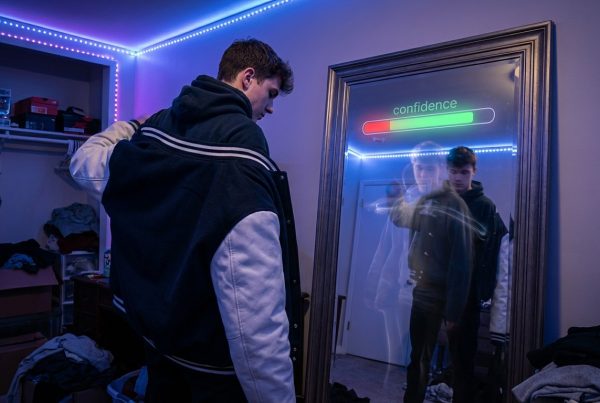
the moment before you click “complete purchase” is a moment of truth. your brain, in a fraction of a second, runs a rapid-fire risk analysis. and for clothing, the biggest risk isn’t financial; it’s a crisis of confidence.
as you stare at your cart, a chorus of doubts begins to whisper:
- “okay, i love this navy blazer… but what will i wear it with? do i own the right kind of pants?”
- “this patterned shirt is cool, but is it too much for the office? will it clash with my everyday shoes?”
- “i’ve added three shirts and two pairs of trousers. do any of these actually work together to make a real outfit?”
- “will this piece end up like the others? the one hanging in the back of my closet, tags still on, an orphan of a failed style experiment?”
this is decision fatigue meeting coordination anxiety.
you aren’t just buying individual items. you’re trying to mentally assemble functional, stylish outfits from a collection of digital images. you’re acting as your own stylist, forecaster, and quality control manager, all at once. it’s exhausting.

the price tag is just the final tipping point. a $70 shirt feels expensive when you’re not 100% sure how you’ll wear it. the same $70 shirt feels like a bargain when you know it seamlessly creates three new outfits with pieces you already own.
the 75% problem isn’t a problem of distraction. it’s a problem of fragmentation. traditional e-commerce forces you to buy in fragments—a shirt here, pants there—and leaves the most difficult part of the equation, a cohesive style, entirely up to you.
when the mental effort of solving that puzzle becomes too great, you abandon the cart. it’s a subconscious act of self-preservation.
the old solution: more choice, more problems
for decades, the fashion industry’s answer to this has been simple: more. more choice, more collections, more trends, more colors. they’ve given us “endless aisles” of digital inventory, believing that somewhere in that overwhelming sea of options lies the perfect item for everyone.
but this “paradox of choice” only makes the problem worse.
more options don’t lead to more clarity; they lead to more paralysis. staring at 200 different blue shirts doesn’t empower you. it drains your mental energy and magnifies your uncertainty. each new item is another variable in an already complex style equation you’re trying to solve in your head.
the result is a graveyard of abandoned carts and a closet full of “nothing to wear.” you own plenty of clothes—fragments—but you lack the key ingredient: outfits.
you don’t need more clothes. you need more certainty.
the polopan solution: stop buying items. start building outfits
we looked at the 75% problem and realized the industry was trying to fix the wrong thing. the issue wasn’t the checkout process; it was the entire shopping philosophy.
that’s why we built polopan around a fundamentally different principle. we don’t want to just sell you clothes. we want to sell you confidence. we want to eliminate the uncertainty that leads to an abandoned cart.
how? by shifting the focus from individual items to cohesive systems. we call it outfit-first commerce.
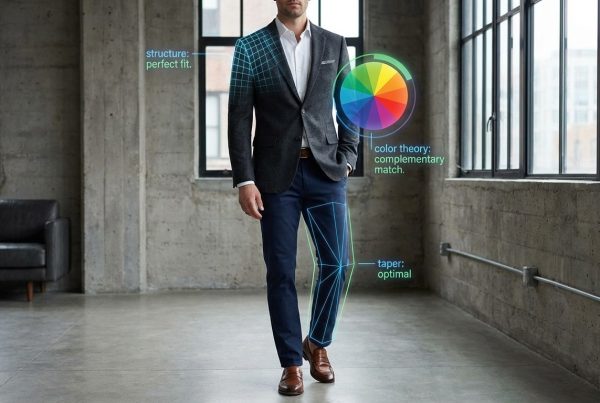
- curated collections, not endless aisles: our collections are intentionally lean and meticulously curated. the colors are complementary. the fabrics are harmonious. the silhouettes are designed to be layered. we’ve done the hard work of coordination for you, so you can’t make a “wrong” choice.
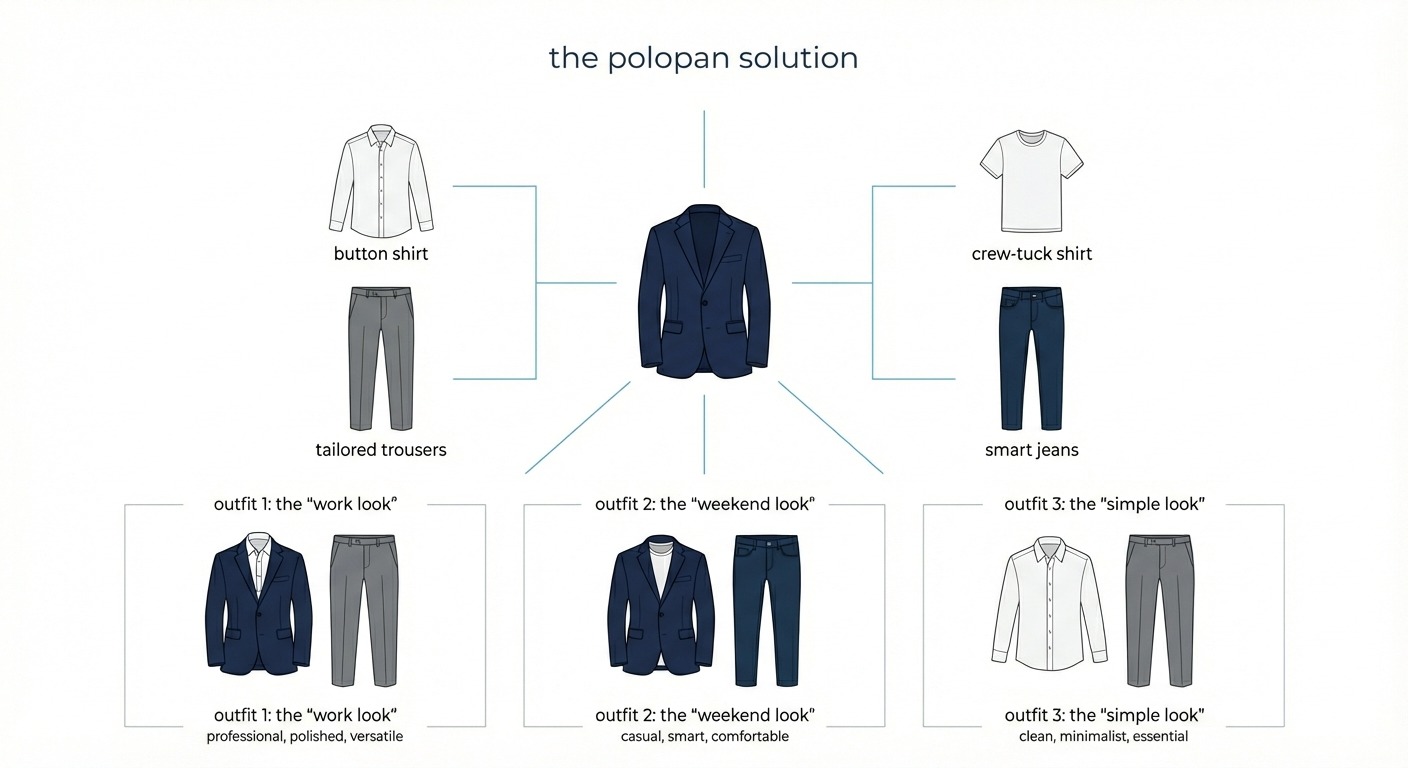
- the “shop the look” standard: you’ll never just see a shirt floating in a white void on our site. every product is presented as part of a complete, wearable look. you see the blazer with the exact shirt and trousers it was designed to complement. with one click, you can add the entire, stylist-approved outfit to your cart, or pick the individual pieces you need. this removes the guesswork and shows you exactly how to wear what you’re buying.
- building a style system: our approach is about building a functional, versatile wardrobe over time—a system where each new piece you buy from us exponentially increases the number of outfits you can create. we focus on foundational “anchor” pieces and show you how to combine them. buying from polopan isn’t a one-off transaction; it’s an investment in a smarter style ecosystem.

when you shop with us, the questions that haunt you at other stores simply disappear.
“will this shirt match those pants?” yes. they were literally designed to.
“how will i wear this?” we show you, right on the product page.
“is this a smart purchase?” yes, because it’s not just one item; it’s the key to unlocking multiple new outfits.
from an abandoned cart to a confident checkout
imagine adding that navy blazer to your cart. but this time, you also see the crisp white shirt and the perfectly tailored grey trousers that complete the look. you see how it’s styled for a business meeting, and how it can be dressed down with a t-shirt for the weekend.
suddenly, you’re not just buying a blazer. you’re buying the confidence for your next presentation. you’re buying three easy, no-brainer outfits for the week ahead. you’re buying back the time and mental energy you used to waste staring into your closet each morning.
the price is no longer an obstacle; it’s a clear investment in a solution. the “complete purchase” button isn’t a moment of risk; it’s a moment of clarity and relief.
the 75% problem is solvable. but it requires a new way of thinking—from both brands and shoppers. it’s time to move past the chaos of endless choice and embrace the intelligence of a curated system. it’s time to stop collecting fragments and start building a wardrobe that works.
go ahead, check your other shopping carts. let them serve as a reminder of a flawed system.
then, come see how it feels to shop with certainty.